


- Afhalen na 1 uur in een winkel met voorraad
- Gratis thuislevering in België vanaf € 30
- Ruim aanbod met 7 miljoen producten
- Afhalen na 1 uur in een winkel met voorraad
- Gratis thuislevering in België vanaf € 30
- Ruim aanbod met 7 miljoen producten





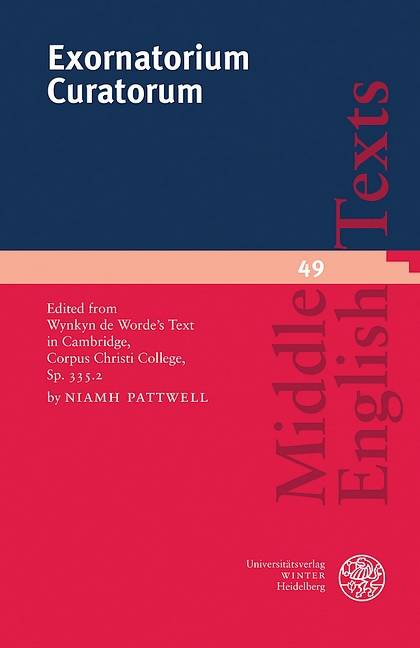
Exornatorium Curatorum
Edited from Wynkyn de Worde's Text in Cambridge, Corpus Christi College, Sp. 335.2
€ 33,95
+ 67 punten
Eenvoudig bestellen
Veilig betalen


Gratis thuislevering vanaf € 30 (via bpost)
Gratis levering in je Standaard Boekhandel
Omschrijving
'Exornatorium Curatorum' is a Middle English manual of religious instruction which was first printed by Wynkyn de Worde in c. 1516. At first glance, the manual appears to be another version of Pecham's 1281 Lambeth statute, 'Ignorancia Sacerdotum'. However, 'Exornatorium Curatorum' is more closely modelled on the 'Opus Tripartitum', a manual written by the French theologian Jean Gerson at the beginning of the fifteenth century. Both are divided into three distinct sections or tracts: credo and ten commandments, the examination of conscience, and the art and craft of dying well. 'Exornatorium Curatorum' is of interest because it deliberately addresses the needs of a lay reader as well as those of the so-called illiterate clergy. Tthere is considerable emphasis on the role of the laity in both the sacrament of penance and in helping people to prepare for death. This first critical edition includes textual variants from the eleven sixteenth-century editions, a commentary, glossary, and bibliography. A detailed introduction compares the various early editions, and also argues for the importance of 'Exornatorium Curatorum' to our understanding of late medieval vernacular religious writing.
Specificaties
Betrokkenen
- Uitgeverij:
Inhoud
- Aantal bladzijden:
- 104
- Taal:
- Engels
- Reeks:
- Reeksnummer:
- nr. 49
Eigenschappen
- Productcode (EAN):
- 9783825361761
- Verschijningsdatum:
- 1/10/2013
- Uitvoering:
- Paperback
- Formaat:
- Trade paperback (VS)
- Afmetingen:
- 154 mm x 234 mm
- Gewicht:
- 171 g

Alleen bij Standaard Boekhandel
+ 67 punten op je klantenkaart van Standaard Boekhandel
CADEAU

AANGERADEN


Beoordelingen
We publiceren alleen reviews die voldoen aan de voorwaarden voor reviews. Bekijk onze voorwaarden voor reviews.