



Je cadeautjes zeker op tijd in huis hebben voor de feestdagen? Kom langs in onze winkels en vind het perfecte geschenk!
- Afhalen na 1 uur in een winkel met voorraad
- Gratis thuislevering in België vanaf € 30
- Ruim aanbod met 7 miljoen producten
Je cadeautjes zeker op tijd in huis hebben voor de feestdagen? Kom langs in onze winkels en vind het perfecte geschenk!
- Afhalen na 1 uur in een winkel met voorraad
- Gratis thuislevering in België vanaf € 30
- Ruim aanbod met 7 miljoen producten





€ 96,45
+ 192 punten
Uitvoering
Omschrijving
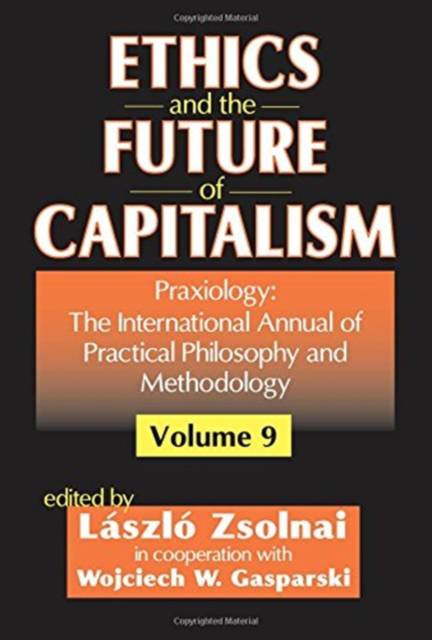
With the collapse of communism and the accelerated trend of globalization, a new stage of capitalism has arrived. Protest actions that occurred in Seattle and Washington as well as in Prague and Genoa, clearly show that the legitimacy of capitalism is being questioned in many respects. Surveys in Eastern and Central Europe show that a considerable part of the population is not able to accept capitalism as an economic system. This volume assesses the ethical basis of capitalism in an effort to assess its future in the twenty-first century.Contributors range from one of the world's most successful capitalists and philanthropists to the founder of INSEAD, Europe's leading business school, to noted economists, philosophers, cultural historians, and business ethicists. Chapter 1, "Against Market Fundamentalism: 'The Capitalist Threat' Reconsidered," by George Soros, Olivier Giscard d'Estaing and others, is the edited and extended version of the public debate with Soros on his influential paper "The Capitalist Threat." Chapter 2, "Ethics of Capitalism," by Peter Koslowski, follows the thesis that capitalism constitutes a necessary component of a free society. Chapter 3, "Misunderstood and Abused Liberalism," by Lubomir Mlcoch, focuses on the problems of Czech-style capitalism. Chapter 4, "Humanizing the Economy" by Stefano Zamagni, investigates the role of civil society in relation to the market and the state. Chapter 5, "The Possibility of Stakeholder Capitalism," by Edward R. Freeman, argues that stakeholder relationships are a key to understanding the functioning of business in today's world. Chapter 6, "Effectiveness, Efficiency, and Ethicality in Business and Management," by Wojciech W. Gasparski, introduces the praxiology tradition in the debate about ethical aspects of capitalism. Chapter 7, "Responsibility and Profit Making," by Lszszl3/4 Zsolnai, explores the conditions for ethical and social acceptability of profit making.Collectively, this volume addresses the ethical problems of the capitalist economy with special reference to globalization, and suggests that business ethics and the future of capitalism are strongly connected. It will be of particular interest to business people, economists, policy makers, social scientists and students of philosophy and ethics.Lszszl3/4 Zsolnai is director of the Business Ethics Center at Budapest University of Economic Sciences and is SzÚchenyi Distinguished Professor in Ethics and Economics, awarded by the Hungarian Ministry of Education. Wojciech W. Gasparski is professor at the Insititute of Philosophy and Sociology, the Polish Academy of Sciences, and editor-in-chief of the Praxiology series.
Specificaties
Betrokkenen
- Auteur(s):
- Uitgeverij:
Inhoud
- Aantal bladzijden:
- 172
- Taal:
- Engels
- Reeks:
Eigenschappen
- Productcode (EAN):
- 9781138509696
- Verschijningsdatum:
- 6/10/2017
- Uitvoering:
- Paperback
- Formaat:
- Trade paperback (VS)
- Afmetingen:
- 152 mm x 229 mm
- Gewicht:
- 235 g



Alleen bij Standaard Boekhandel
+ 192 punten op je klantenkaart van Standaard Boekhandel
CADEAU


Beoordelingen
We publiceren alleen reviews die voldoen aan de voorwaarden voor reviews. Bekijk onze voorwaarden voor reviews.