


- Afhalen na 1 uur in een winkel met voorraad
- Gratis thuislevering in België vanaf € 30
- Ruim aanbod met 7 miljoen producten
- Afhalen na 1 uur in een winkel met voorraad
- Gratis thuislevering in België vanaf € 30
- Ruim aanbod met 7 miljoen producten





€ 117,95
+ 235 punten
Uitvoering
Eenvoudig bestellen
Veilig betalen


Gratis thuislevering vanaf € 30 (via bpost)
Gratis levering in je Standaard Boekhandel
Omschrijving
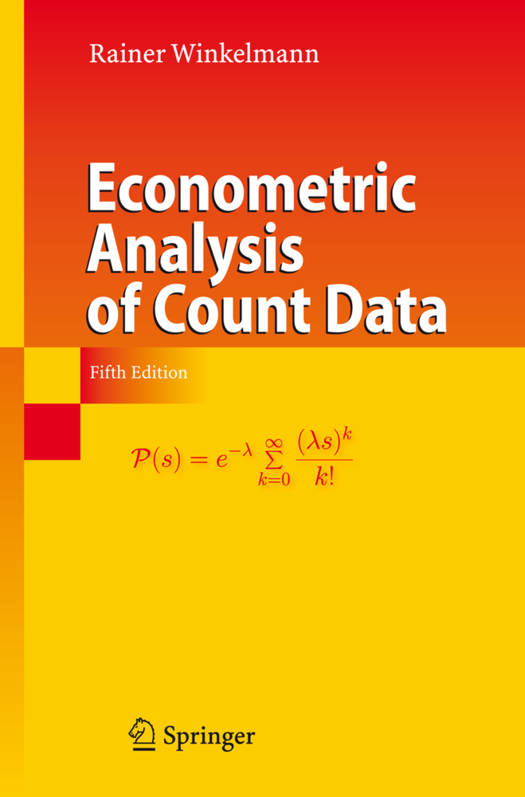
The "count data" ?eld has further ?ourished since the previous edition of this book was published in 2003. The development of new methods has not slowed down by any means, and the application of existing ones in applied work has expanded in many areas of social science research. This, in itself, would be reason enough for updating the material in this book, to ensure that it continues to provide a fair representation of the current state of research. In addition, however, I have seized the opportunity to undertake some major changes to the organization of the book itself. The core material on cross-section models for count data is now presented in four chapters, rather than in two as previously. The ?rst of these four chapters introduces the Poissonregressionmodel, anditsestimationbymaximumlikelihoodorpseudo maximum likelihood. The second focuses on unobserved heterogeneity, the third on endogeneity and non-random sample selection. The fourth chapter provides an extended and uni?ed discussion of zeros in count data models. This topic deserves, in my view, special emphasis, as it relates to aspects of modeling and estimation that are speci?c to counts, as opposed to general exponential regression models for non-negative dependent variables. Count distributions put positive probability mass on single o- comes, and thus o?er a richer set of interesting inferences.
Specificaties
Betrokkenen
- Auteur(s):
- Uitgeverij:
Inhoud
- Aantal bladzijden:
- 320
- Taal:
- Engels
Eigenschappen
- Productcode (EAN):
- 9783540776482
- Verschijningsdatum:
- 8/04/2008
- Uitvoering:
- Hardcover
- Formaat:
- Genaaid
- Afmetingen:
- 156 mm x 234 mm
- Gewicht:
- 666 g


Alleen bij Standaard Boekhandel
+ 235 punten op je klantenkaart van Standaard Boekhandel
CADEAU

AANGERADEN


Beoordelingen
We publiceren alleen reviews die voldoen aan de voorwaarden voor reviews. Bekijk onze voorwaarden voor reviews.