



Je cadeautjes zeker op tijd in huis hebben voor de feestdagen? Kom langs in onze winkels en vind het perfecte geschenk!
- Afhalen na 1 uur in een winkel met voorraad
- Gratis thuislevering in België vanaf € 30
- Ruim aanbod met 7 miljoen producten
Je cadeautjes zeker op tijd in huis hebben voor de feestdagen? Kom langs in onze winkels en vind het perfecte geschenk!
- Afhalen na 1 uur in een winkel met voorraad
- Gratis thuislevering in België vanaf € 30
- Ruim aanbod met 7 miljoen producten





Omschrijving
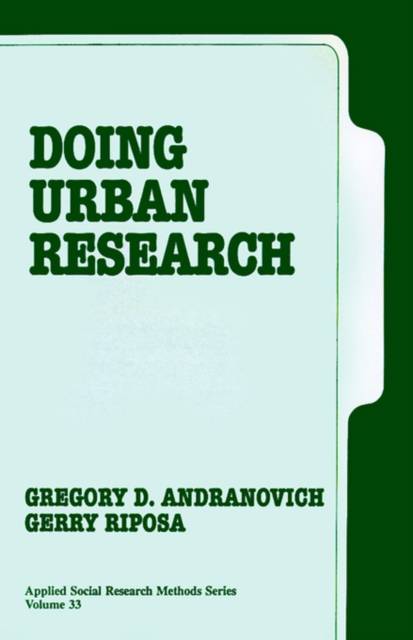
The book′s focus on applied urban research would seem to make it particularly useful to nonacademic researchers. Because it condenses a lot of information into a limited amount of space, however, the work will benefit from use in a classroom setting, where an experienced researcher can elaborate on points made or examples used in the text, supplement its contents with material from additional sources, and guide students through the exercises suggested at the end of each chapter. --Canadian Journal of Urban Research What is the current spatial form and structure of our urban environment? How can we study the factors and forces that account for the specific structure of urban space, its social and political processes, population distribution, and land use? Addressing these and other important issues, Gregory D. Andranovich and Gerry Riposa highlight specific urban research questions and the ways in which they can be approached by offering a framework for doing urban research. Covering such topics as how to choose a research design, secondary research methods for data collection, and how to enhance research utilization, the authors demonstrate ways to pair research questions with specific analysis and national-level analysis. Students and researchers in sociology, political science, psychology, public policy, and anthropology will find this book a useful guide for planning and executing urban research.
Specificaties
Betrokkenen
- Auteur(s):
- Uitgeverij:
Inhoud
- Aantal bladzijden:
- 115
- Taal:
- Engels
- Reeks:
- Reeksnummer:
- nr. 33
Eigenschappen
- Productcode (EAN):
- 9780803939899
- Verschijningsdatum:
- 1/12/1993
- Uitvoering:
- Paperback
- Formaat:
- Trade paperback (VS)
- Afmetingen:
- 141 mm x 217 mm
- Gewicht:
- 136 g


Alleen bij Standaard Boekhandel
+ 354 punten op je klantenkaart van Standaard Boekhandel
CADEAU


Beoordelingen
We publiceren alleen reviews die voldoen aan de voorwaarden voor reviews. Bekijk onze voorwaarden voor reviews.