



Bedankt voor het vertrouwen het afgelopen jaar! Om jou te bedanken bieden we GRATIS verzending (in België) aan op alles gedurende de hele maand januari.
- Afhalen na 1 uur in een winkel met voorraad
- In januari gratis thuislevering in België
- Ruim aanbod met 7 miljoen producten
Bedankt voor het vertrouwen het afgelopen jaar! Om jou te bedanken bieden we GRATIS verzending (in België) aan op alles gedurende de hele maand januari.
- Afhalen na 1 uur in een winkel met voorraad
- In januari gratis thuislevering in België
- Ruim aanbod met 7 miljoen producten





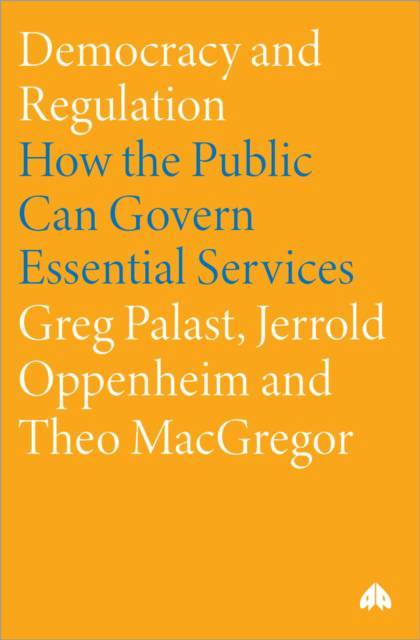
Democracy and Regulation: How the Public Can Govern Essential Services
How the Public Can Govern Essential Services
Greg Palast, Jerrold Oppenheim, Theo MacGregor
Paperback | Engels
€ 51,95
+ 103 punten
Omschrijving
Essential services are being privatised the world over. Whether it's water, gas, electricity or the phone network, everywhere from Sao Paulo in Brazil to Leeds in the UK is following the US economic model and handing public services over to private companies whose principal interest is raising prices. Yet it's one of the world's best kept secrets that Americans pay astonishingly little for high quality public services. This book, based on work for the United Nations International Labour Organisation is the first step-by-step guide to the way that public services are regulated in the United States. It explains how decisions are made by public debate in a public forum. Profits and investments of private companies are capped, and companies are forced to reduce prices for the poor, fund environmental investments and open themselves to financial inspection. In a world where privatisation has so often led to economic disaster, this book is essential reading.
Specificaties
Betrokkenen
- Auteur(s):
- Uitgeverij:
Inhoud
- Aantal bladzijden:
- 240
- Taal:
- Engels
Eigenschappen
- Productcode (EAN):
- 9780745319421
- Verschijningsdatum:
- 20/12/2002
- Uitvoering:
- Paperback
- Formaat:
- Trade paperback (VS)
- Afmetingen:
- 156 mm x 234 mm
- Gewicht:
- 403 g



Alleen bij Standaard Boekhandel
+ 103 punten op je klantenkaart van Standaard Boekhandel
SOLDEN


Beoordelingen
We publiceren alleen reviews die voldoen aan de voorwaarden voor reviews. Bekijk onze voorwaarden voor reviews.