


- Afhalen na 1 uur in een winkel met voorraad
- Gratis thuislevering in België vanaf € 30
- Ruim aanbod met 7 miljoen producten
- Afhalen na 1 uur in een winkel met voorraad
- Gratis thuislevering in België vanaf € 30
- Ruim aanbod met 7 miljoen producten





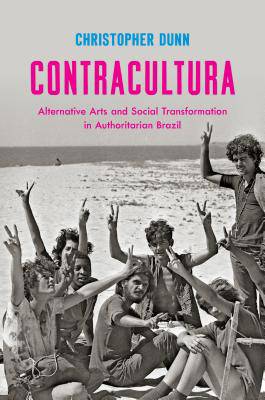
Contracultura
Alternative Arts and Social Transformation in Authoritarian Brazil
Christopher Dunn
Paperback | Engels
€ 43,45
+ 86 punten
Uitvoering
Omschrijving
Christopher Dunn's history of authoritarian Brazil exposes the inventive cultural production and intense social transformations that emerged during the rule of an iron-fisted military regime during the sixties and seventies. The Brazilian contracultura was a complex and multifaceted phenomenon that developed alongside the ascent of hardline forces within the regime in the late 1960s. Focusing on urban, middle-class Brazilians often inspired by the international counterculture that flourished in the United States and parts of western Europe, Dunn shows how new understandings of race, gender, sexuality, and citizenship erupted under even the most oppressive political conditions.
Dunn reveals previously ignored connections between the counterculture and Brazilian music, literature, film, visual arts, and alternative journalism. In chronicling desbunde, the Brazilian hippie movement, he shows how the state of Bahia, renowned for its Afro-Brazilian culture, emerged as a countercultural mecca for youth in search of spiritual alternatives. As this critical and expansive book demonstrates, many of the country's social and justice movements have their origins in the countercultural attitudes, practices, and sensibilities that flourished during the military dictatorship.
Specificaties
Betrokkenen
- Auteur(s):
- Uitgeverij:
Inhoud
- Aantal bladzijden:
- 272
- Taal:
- Engels
Eigenschappen
- Productcode (EAN):
- 9781469628516
- Verschijningsdatum:
- 14/11/2016
- Uitvoering:
- Paperback
- Formaat:
- Trade paperback (VS)
- Afmetingen:
- 158 mm x 235 mm
- Gewicht:
- 412 g


Alleen bij Standaard Boekhandel
+ 86 punten op je klantenkaart van Standaard Boekhandel
AANGERADEN


Beoordelingen
We publiceren alleen reviews die voldoen aan de voorwaarden voor reviews. Bekijk onze voorwaarden voor reviews.