



Bedankt voor het vertrouwen het afgelopen jaar! Om jou te bedanken bieden we GRATIS verzending (in België) aan op alles gedurende de hele maand januari.
- Afhalen na 1 uur in een winkel met voorraad
- In januari gratis thuislevering in België
- Ruim aanbod met 7 miljoen producten
Bedankt voor het vertrouwen het afgelopen jaar! Om jou te bedanken bieden we GRATIS verzending (in België) aan op alles gedurende de hele maand januari.
- Afhalen na 1 uur in een winkel met voorraad
- In januari gratis thuislevering in België
- Ruim aanbod met 7 miljoen producten





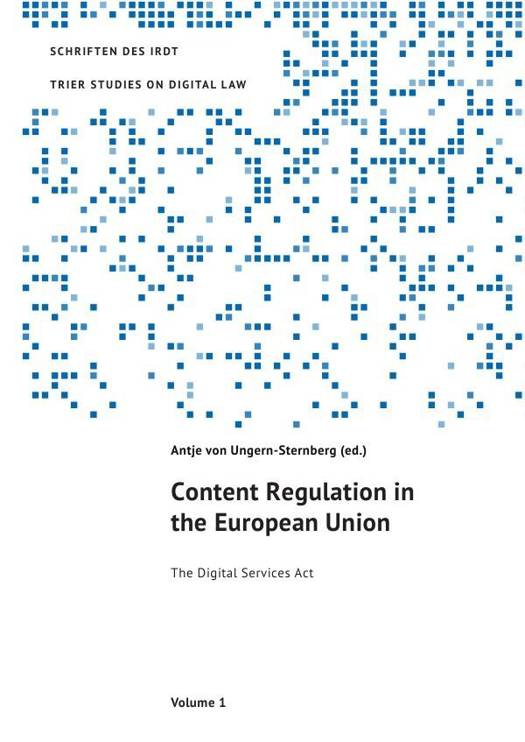
Content Regulation in the European Union
The Digital Services Act
Antje von Ungern-Sternberg, Florence G'Sell, Ruth Janal, Lea Katharina Kumkar, Martin Steinebach, Mattias Wendel
Paperback | Duits
€ 16,95
+ 33 punten
Omschrijving
Illegal and (lawful, but) harmful content - most notably hate speech and fake news, but also violent videos, copyright infringement, or child pornography - is a crucial problem on digital platforms like Facebook, YouTube, TikTok and Twitter. The EU's 2022 Digital Services Act aims at tackling this problem by introducing an updated horizontal framework for all categories of content and activities on intermediary services. This raises several questions. How far do - national and European - free speech guarantees go? If hate speech can be banned to protect the victims' rights, how can the prohibition of fake news be justified? What is the remaining leeway of the platforms for private content moderation? Who is responsible for fighting and taking down illegal content? How can the victims of de-platforming, content takedowns or shadow banning claim their right to freedom of opinion? Finally, how will these legal responsibilities be enforced? These questions are addressed in the articles of the edited volume, proceeding from the 2022 Annual Conference of the Institute for Digital Law Trier (IRDT).
Specificaties
Betrokkenen
- Auteur(s):
- Uitgeverij:
Inhoud
- Aantal bladzijden:
- 152
- Taal:
- Duits
Eigenschappen
- Productcode (EAN):
- 9783757550950
- Uitvoering:
- Paperback
- Afmetingen:
- 170 mm x 8 mm
- Gewicht:
- 268 g


Alleen bij Standaard Boekhandel
+ 33 punten op je klantenkaart van Standaard Boekhandel
SOLDEN


Beoordelingen
We publiceren alleen reviews die voldoen aan de voorwaarden voor reviews. Bekijk onze voorwaarden voor reviews.