



Bedankt voor het vertrouwen het afgelopen jaar! Om jou te bedanken bieden we GRATIS verzending (in België) aan op alles gedurende de hele maand januari.
- Afhalen na 1 uur in een winkel met voorraad
- In januari gratis thuislevering in België
- Ruim aanbod met 7 miljoen producten
Bedankt voor het vertrouwen het afgelopen jaar! Om jou te bedanken bieden we GRATIS verzending (in België) aan op alles gedurende de hele maand januari.
- Afhalen na 1 uur in een winkel met voorraad
- In januari gratis thuislevering in België
- Ruim aanbod met 7 miljoen producten





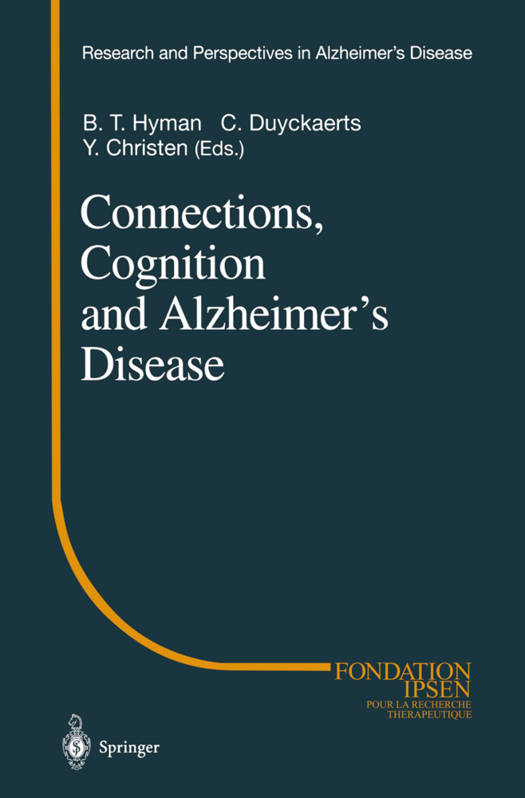
Connections, Cognition and Alzheimer's Disease
€ 125,95
+ 251 punten
Omschrijving
Alzheimer's disease invades the brain from the inside. Unlike an abcess, a metas- tasis or an infarct, the disease follows specific tracks and avoids certain cortical areas while flourishing in others. Any observer is struck by the exquisite selectiv- ity of the lesions and could, indeed, conclude that Alzheimer's disease knows neuroanatomy. However, should the term "disease" be used to define this disor- der? Several genes, located on at least three different chromosomes, have been implicated in the disease. The ApoE4 genotype has been shown to be an impor- tant risk factor, but dementia pugilistica also suggests that environment can be involved in at least some aspects of the disorder. These data favor the now preva- lent view that Alzheimer's disease should instead be considered as a syndrome, and probably all of the contributors to this volume are ready to endorse this point of view. If "Alzheimer's syndrome" is the final common pathway to several pathoge- netic mechanisms, there should be an event at one point in the course of the spe- cific etiology that triggers a somewhat stereotypic diffusion process along some neural connections. Scientists who are fascinated by the way in which the ner- vous system has morphologically encoded its function after a long phylogenetic history are also fascinated by this pathological progression of Alzheimer's syn- drome.
Specificaties
Betrokkenen
- Uitgeverij:
Inhoud
- Aantal bladzijden:
- 194
- Taal:
- Engels
- Reeks:
Eigenschappen
- Productcode (EAN):
- 9783642645044
- Verschijningsdatum:
- 22/09/2011
- Uitvoering:
- Paperback
- Formaat:
- Trade paperback (VS)
- Afmetingen:
- 156 mm x 234 mm
- Gewicht:
- 303 g

Alleen bij Standaard Boekhandel
+ 251 punten op je klantenkaart van Standaard Boekhandel
SOLDEN


Beoordelingen
We publiceren alleen reviews die voldoen aan de voorwaarden voor reviews. Bekijk onze voorwaarden voor reviews.