



Je cadeautjes zeker op tijd in huis hebben voor de feestdagen? Kom langs in onze winkels en vind het perfecte geschenk!
- Afhalen na 1 uur in een winkel met voorraad
- Gratis thuislevering in België vanaf € 30
- Ruim aanbod met 7 miljoen producten
Je cadeautjes zeker op tijd in huis hebben voor de feestdagen? Kom langs in onze winkels en vind het perfecte geschenk!
- Afhalen na 1 uur in een winkel met voorraad
- Gratis thuislevering in België vanaf € 30
- Ruim aanbod met 7 miljoen producten





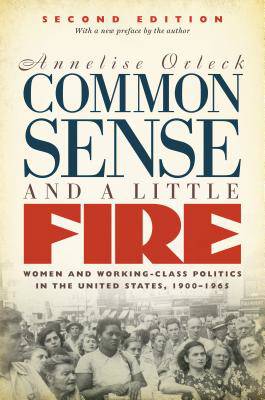
Common Sense and a Little Fire
Women and Working-Class Politics in the United States, 1900-1965
Annelise Orleck
€ 57,45
+ 114 punten
Omschrijving
Over twenty years after its initial publication, Annelise Orleck's Common Sense and a Little Fire continues to resonate with its harrowing story of activism, labor, and women's history. Orleck traces the personal and public lives of four immigrant women activists who left a lasting imprint on American politics. Though they have rarely made more than cameo appearances in previous histories, Rose Schneiderman, Fannia Cohn, Clara Lemlich Shavelson, and Pauline Newman played important roles in the emergence of organized labor, the New Deal welfare state, adult education, and the modern women's movement. Orleck takes her four subjects from turbulent, turn-of-the-century Eastern Europe to the radical ferment of New York's Lower East Side and the gaslit tenements where young workers studied together. Orleck paints a compelling picture of housewives' food and rent protests, of grim conditions in the garment shops, of factory-floor friendships that laid the basis for a mass uprising of young women garment workers, and of the impassioned rallies working women organized for suffrage.
Featuring a new preface by the author, this new edition reasserts itself as a pivotal text in twentieth-century labor history.
Featuring a new preface by the author, this new edition reasserts itself as a pivotal text in twentieth-century labor history.
Specificaties
Betrokkenen
- Auteur(s):
- Uitgeverij:
Inhoud
- Aantal bladzijden:
- 424
- Taal:
- Engels
- Reeks:
Eigenschappen
- Productcode (EAN):
- 9781469635910
- Verschijningsdatum:
- 2/10/2017
- Uitvoering:
- Paperback
- Formaat:
- Trade paperback (VS)
- Afmetingen:
- 161 mm x 228 mm
- Gewicht:
- 607 g


Alleen bij Standaard Boekhandel
+ 114 punten op je klantenkaart van Standaard Boekhandel
CADEAU


Beoordelingen
We publiceren alleen reviews die voldoen aan de voorwaarden voor reviews. Bekijk onze voorwaarden voor reviews.