



Bedankt voor het vertrouwen het afgelopen jaar! Om jou te bedanken bieden we GRATIS verzending (in België) aan op alles gedurende de hele maand januari.
- Afhalen na 1 uur in een winkel met voorraad
- In januari gratis thuislevering in België
- Ruim aanbod met 7 miljoen producten
Bedankt voor het vertrouwen het afgelopen jaar! Om jou te bedanken bieden we GRATIS verzending (in België) aan op alles gedurende de hele maand januari.
- Afhalen na 1 uur in een winkel met voorraad
- In januari gratis thuislevering in België
- Ruim aanbod met 7 miljoen producten





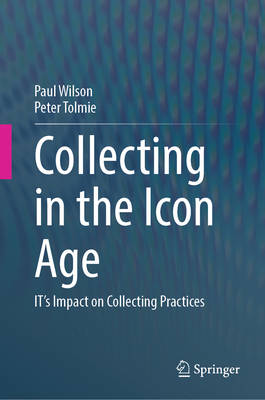
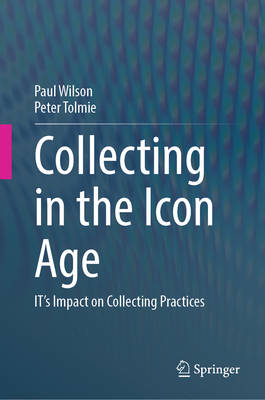
Collecting in the Icon Age
It's Impact on Collecting Practices
Paul Wilson, Peter Tolmie
Hardcover | Engels
€ 305,45
+ 610 punten
Omschrijving
This book is about the impact of the 'Icon Age' on people's collecting practices. The Icon Age is when objects began to be represented on computer screens via icons. It focuses on how the Icon Age has affected how people do things associated with collections, from their inception to their disposal and everything in-between. It also looks at different kinds of collections and how they are managed across seven key collecting contexts: accumulations; libraries; filing-systems; archives; museums and galleries; private collections; and amateur collections. To inform this, studies were undertaken of how collecting was done across a range of diverse collections. The book also presents a taxonomy of collectable object types, including new types of objects that have appeared since the onset of the Icon Age. The book draws out important lessons regarding the impact of IT on collecting practices and contexts. It also suggests that, where contexts use digital practices, these exhibit an increasing level of conformity. The book concludes by looking beyond the Icon Age to the potential impact on collecting of new kinds of computing technology.
Specificaties
Betrokkenen
- Auteur(s):
- Uitgeverij:
Inhoud
- Aantal bladzijden:
- 294
- Taal:
- Engels
Eigenschappen
- Productcode (EAN):
- 9783031864698
- Verschijningsdatum:
- 28/06/2025
- Uitvoering:
- Hardcover
- Formaat:
- Genaaid
- Afmetingen:
- 156 mm x 234 mm
- Gewicht:
- 616 g


Alleen bij Standaard Boekhandel
+ 610 punten op je klantenkaart van Standaard Boekhandel
SOLDEN


Beoordelingen
We publiceren alleen reviews die voldoen aan de voorwaarden voor reviews. Bekijk onze voorwaarden voor reviews.