



Bedankt voor het vertrouwen het afgelopen jaar! Om jou te bedanken bieden we GRATIS verzending (in België) aan op alles gedurende de hele maand januari.
- Afhalen na 1 uur in een winkel met voorraad
- Gratis thuislevering in België vanaf € 30
- Ruim aanbod met 7 miljoen producten
Bedankt voor het vertrouwen het afgelopen jaar! Om jou te bedanken bieden we GRATIS verzending (in België) aan op alles gedurende de hele maand januari.
- Afhalen na 1 uur in een winkel met voorraad
- Gratis thuislevering in België vanaf € 30
- Ruim aanbod met 7 miljoen producten





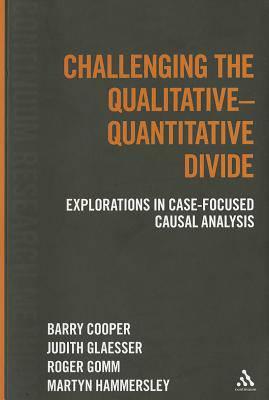
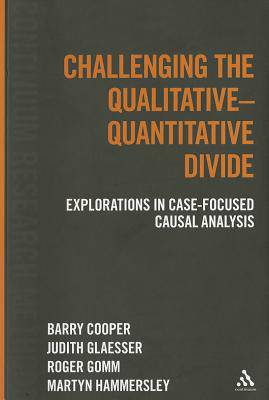
Challenging the Qualitative-Quantitative Divide
Explorations in Case-Focused Causal Analysis
Barry Cooper, Judith Glaesser, Roger Gomm, Martyn Hammersley
€ 99,95
+ 199 punten
Uitvoering
Omschrijving
This book challenges the divide between qualitative and quantitative approaches that is now institutionalized within social science. Rather than suggesting the 'mixing' of methods, Challenging the Qualitative-Quantitative Divide provides a thorough interrogation of the arguments and practices characteristic of both sides of the divide, focusing on how well they address the common problems that all social research faces, particularly as regards causal analysis. The authors identify some fundamental weaknesses in both quantitative and qualitative approaches, and explore whether case-focused analysis - for instance, in the form of Qualitative Comparative Analysis, Analytic Induction, Grounded Theorising, or Cluster Analysis - can bridge the gap between the two sides.
Specificaties
Betrokkenen
- Auteur(s):
- Uitgeverij:
Inhoud
- Aantal bladzijden:
- 288
- Taal:
- Engels
- Reeks:
- Reeksnummer:
- nr. 1
Eigenschappen
- Productcode (EAN):
- 9781441114396
- Verschijningsdatum:
- 10/05/2012
- Uitvoering:
- Paperback
- Formaat:
- Trade paperback (VS)
- Afmetingen:
- 155 mm x 231 mm
- Gewicht:
- 417 g


Alleen bij Standaard Boekhandel
+ 199 punten op je klantenkaart van Standaard Boekhandel
CADEAU


Beoordelingen
We publiceren alleen reviews die voldoen aan de voorwaarden voor reviews. Bekijk onze voorwaarden voor reviews.