



Bedankt voor het vertrouwen het afgelopen jaar! Om jou te bedanken bieden we GRATIS verzending (in België) aan op alles gedurende de hele maand januari.
- Afhalen na 1 uur in een winkel met voorraad
- Gratis thuislevering in België vanaf € 30
- Ruim aanbod met 7 miljoen producten
Bedankt voor het vertrouwen het afgelopen jaar! Om jou te bedanken bieden we GRATIS verzending (in België) aan op alles gedurende de hele maand januari.
- Afhalen na 1 uur in een winkel met voorraad
- Gratis thuislevering in België vanaf € 30
- Ruim aanbod met 7 miljoen producten





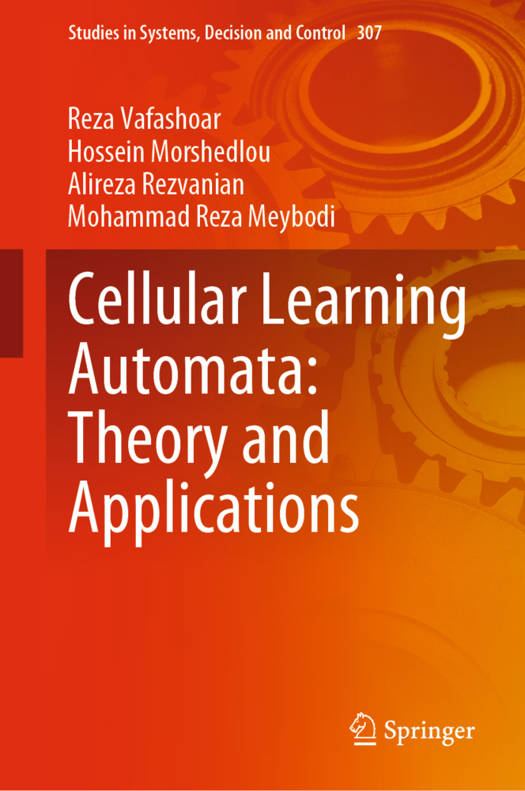
Cellular Learning Automata: Theory and Applications
Reza Vafashoar, Hossein Morshedlou, Alireza Rezvanian, Mohammad Reza Meybodi
€ 259,45
+ 518 punten
Uitvoering
Omschrijving
This book highlights both theoretical and applied advances in cellular learning automata (CLA), a type of hybrid computational model that has been successfully employed in various areas to solve complex problems and to model, learn, or simulate complicated patterns of behavior. Owing to CLA's parallel and learning abilities, it has proven to be quite effective in uncertain, time-varying, decentralized, and distributed environments.
The book begins with a brief introduction to various CLA models, before focusing on recently developed CLA variants. In turn, the research areas related to CLA are addressed as bibliometric network analysis perspectives. The next part of the book presents CLA-based solutions to several computer science problems in e.g. static optimization, dynamic optimization, wireless networks, mesh networks, and cloud computing. Given its scope, the book is well suited for all researchers in the fields of artificial intelligence and reinforcement learning.
The book begins with a brief introduction to various CLA models, before focusing on recently developed CLA variants. In turn, the research areas related to CLA are addressed as bibliometric network analysis perspectives. The next part of the book presents CLA-based solutions to several computer science problems in e.g. static optimization, dynamic optimization, wireless networks, mesh networks, and cloud computing. Given its scope, the book is well suited for all researchers in the fields of artificial intelligence and reinforcement learning.
Specificaties
Betrokkenen
- Auteur(s):
- Uitgeverij:
Inhoud
- Aantal bladzijden:
- 365
- Taal:
- Engels
- Reeks:
- Reeksnummer:
- nr. 307
Eigenschappen
- Productcode (EAN):
- 9783030531409
- Verschijningsdatum:
- 25/07/2020
- Uitvoering:
- Hardcover
- Formaat:
- Genaaid
- Afmetingen:
- 156 mm x 234 mm
- Gewicht:
- 712 g


Alleen bij Standaard Boekhandel
+ 518 punten op je klantenkaart van Standaard Boekhandel
CADEAU


Beoordelingen
We publiceren alleen reviews die voldoen aan de voorwaarden voor reviews. Bekijk onze voorwaarden voor reviews.