


- Afhalen na 1 uur in een winkel met voorraad
- Gratis thuislevering in België vanaf € 30
- Ruim aanbod met 7 miljoen producten
- Afhalen na 1 uur in een winkel met voorraad
- Gratis thuislevering in België vanaf € 30
- Ruim aanbod met 7 miljoen producten





€ 79,45
+ 158 punten
Uitvoering
Omschrijving
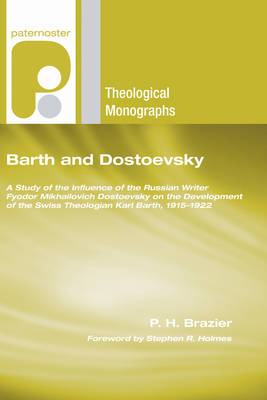
A work of historic and systematic theology, Barth and Dostoevsky, examines the influence of the Russian writer and prophet Fyodor Mikhailovich Dostoevsky on the Swiss theologian Karl Barth. This is a study that demonstrates that the writings of Dostoevsky affected the development of the theology of Karl Barth. This was an influence mediated by his friend and colleague Eduard Thurneysen and was in the form of a key element of Barth's thought: his understanding of sin and grace. Therefore, this study explicates first, the reading of Dostoevsky by Barth, 1915-1916, and the influence on this understanding of sin and grace; second, a study of Eduard Thurneysen in so far as his life and work complements and influences Barth; third, Barth's illustrative use of Dostoevsky, around 1918-1921, the period of the rewriting of his seminal commentary on Romans--"the bombshell on the playground of the theologians," as Karl Adams put it.
Specificaties
Betrokkenen
- Auteur(s):
- Uitgeverij:
Inhoud
- Aantal bladzijden:
- 290
- Taal:
- Engels
- Reeks:
Eigenschappen
- Productcode (EAN):
- 9781498251273
- Verschijningsdatum:
- 1/04/2008
- Uitvoering:
- Hardcover
- Formaat:
- Genaaid
- Afmetingen:
- 152 mm x 229 mm
- Gewicht:
- 557 g


Alleen bij Standaard Boekhandel
+ 158 punten op je klantenkaart van Standaard Boekhandel
AANGERADEN


Beoordelingen
We publiceren alleen reviews die voldoen aan de voorwaarden voor reviews. Bekijk onze voorwaarden voor reviews.