



Je cadeautjes zeker op tijd in huis hebben voor de feestdagen? Kom langs in onze winkels en vind het perfecte geschenk!
- Afhalen na 1 uur in een winkel met voorraad
- Gratis thuislevering in België vanaf € 30
- Ruim aanbod met 7 miljoen producten
Je cadeautjes zeker op tijd in huis hebben voor de feestdagen? Kom langs in onze winkels en vind het perfecte geschenk!
- Afhalen na 1 uur in een winkel met voorraad
- Gratis thuislevering in België vanaf € 30
- Ruim aanbod met 7 miljoen producten





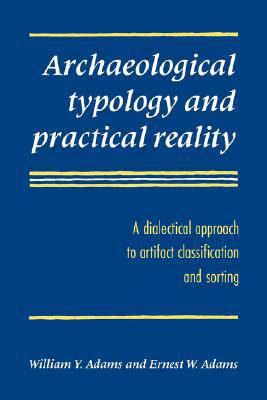
Archaeological Typology and Practical Reality
A Dialectical Approach to Artifact Classification and Sorting
William Y Adams, Ernest W Adams
Paperback | Engels
€ 98,45
+ 196 punten
Omschrijving
Classifications are central to archaeology. Yet the theoretical literature on the subject, both in archaeology and the philosophy of science, bears very little relationship to what actually occurs in practice. This problem has long interested William Adams, a field archaeologist, and Ernest Adams, a philosopher of science, who describe their book as an ethnography of archaeological classification. It is a study of the various ways in which field archaeologists set about making and using classifications to meet a variety of practical needs. The authors first discuss how humans form concepts. They then describe and analyse in detail a specific example of an archaeological classification, and go on to consider what theoretical generalizations can be derived from the study of actual in-use classifications. Throughout the book, they stress the importance of having a clearly defined purpose and practical procedures when developing and applying classifications.
Specificaties
Betrokkenen
- Auteur(s):
- Uitgeverij:
Inhoud
- Aantal bladzijden:
- 452
- Taal:
- Engels
Eigenschappen
- Productcode (EAN):
- 9780521048675
- Verschijningsdatum:
- 26/11/2007
- Uitvoering:
- Paperback
- Formaat:
- Trade paperback (VS)
- Afmetingen:
- 152 mm x 229 mm
- Gewicht:
- 657 g


Alleen bij Standaard Boekhandel
+ 196 punten op je klantenkaart van Standaard Boekhandel
CADEAU


Beoordelingen
We publiceren alleen reviews die voldoen aan de voorwaarden voor reviews. Bekijk onze voorwaarden voor reviews.