



Je cadeautjes zeker op tijd in huis hebben voor de feestdagen? Kom langs in onze winkels en vind het perfecte geschenk!
- Afhalen na 1 uur in een winkel met voorraad
- Gratis thuislevering in België vanaf € 30
- Ruim aanbod met 7 miljoen producten
Je cadeautjes zeker op tijd in huis hebben voor de feestdagen? Kom langs in onze winkels en vind het perfecte geschenk!
- Afhalen na 1 uur in een winkel met voorraad
- Gratis thuislevering in België vanaf € 30
- Ruim aanbod met 7 miljoen producten





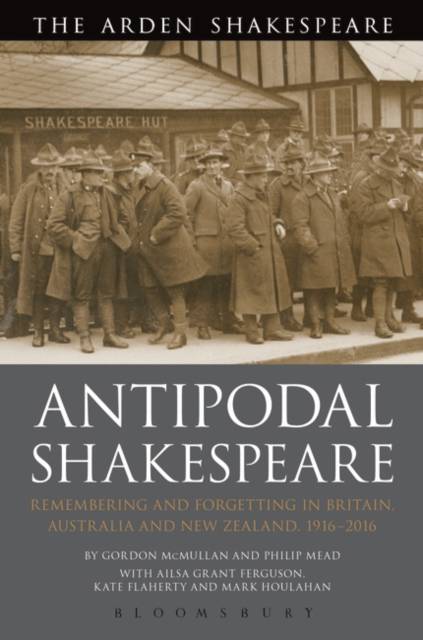
Antipodal Shakespeare
Remembering and Forgetting in Britain, Australia and New Zealand, 1916 - 2016
Gordon McMullan, Philip Mead, Ailsa Grant Ferguson
Hardcover | Engels
€ 228,95
+ 457 punten
Uitvoering
Omschrijving
Despite a recent surge of critical interest in the Shakespeare Tercentenary, a great deal has been forgotten about this key moment in the history of the place of Shakespeare in national and global culture - much more than has been remembered. This book offers new archival discoveries about, and new interpretations of, the Tercentenary celebrations in Britain, Australia and New Zealand and reflects on the long legacy of those celebrations.
This collection gathers together five scholars from Britain, Australia and New Zealand to reflect on the modes of commemoration of Shakespeare across the hemispheres in and after the Tercentenary year, 1916. It was at this moment of remembering in 1916 that 'global Shakespeare' first emerged in recognizable form. Each contributor performs their own 'antipodal' reading, assessing in parallel events across two hemispheres, geographically opposite but politically and culturally connected in the wake of empire.
This collection gathers together five scholars from Britain, Australia and New Zealand to reflect on the modes of commemoration of Shakespeare across the hemispheres in and after the Tercentenary year, 1916. It was at this moment of remembering in 1916 that 'global Shakespeare' first emerged in recognizable form. Each contributor performs their own 'antipodal' reading, assessing in parallel events across two hemispheres, geographically opposite but politically and culturally connected in the wake of empire.
Specificaties
Betrokkenen
- Auteur(s):
- Uitgeverij:
Inhoud
- Aantal bladzijden:
- 240
- Taal:
- Engels
Eigenschappen
- Productcode (EAN):
- 9781474271431
- Verschijningsdatum:
- 8/02/2018
- Uitvoering:
- Hardcover
- Formaat:
- Genaaid
- Afmetingen:
- 132 mm x 201 mm
- Gewicht:
- 399 g



Alleen bij Standaard Boekhandel
+ 457 punten op je klantenkaart van Standaard Boekhandel
CADEAU


Beoordelingen
We publiceren alleen reviews die voldoen aan de voorwaarden voor reviews. Bekijk onze voorwaarden voor reviews.