



Bedankt voor het vertrouwen het afgelopen jaar! Om jou te bedanken bieden we GRATIS verzending (in België) aan op alles gedurende de hele maand januari.
- Afhalen na 1 uur in een winkel met voorraad
- In januari gratis thuislevering in België
- Ruim aanbod met 7 miljoen producten
Bedankt voor het vertrouwen het afgelopen jaar! Om jou te bedanken bieden we GRATIS verzending (in België) aan op alles gedurende de hele maand januari.
- Afhalen na 1 uur in een winkel met voorraad
- In januari gratis thuislevering in België
- Ruim aanbod met 7 miljoen producten





€ 19,00
+ 38 punten
Uitvoering
Omschrijving
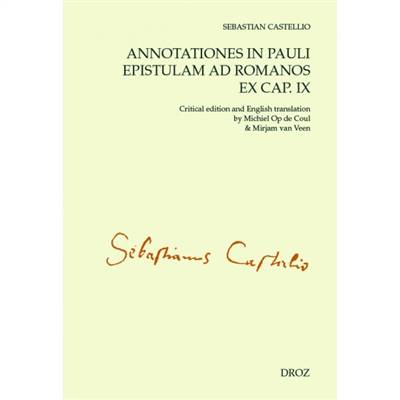
"Sebastian Castellio wrote his Annotation on Rom 9 during stormy times. After the trial against Miguel Servetus and the ensuing polemic from Castellio and his allies against it, Geneva came to see Sebastian Castellio as a threat against the reformation. His Annotation on Rom 9 probably confirmed this verdict. Castellio used it to speak out against John Calvin’s doctrine on predestination and to elaborate on his own ideas about the perfectibility of humans.
Castellio published his Annotation on Rom 9 only once, in his 1554 Latin Bible. In subsequent editions it was replaced by an asterisk and the short remark “maior serviet minori.” Many scholars assumed that it was censorship of Castellio’s text and even took it for granted that it was erased from Castellio’s Bible. But that is certainly not what happened: censorship was probably less severe than scholars have so often assumed. This critical edition together with the English translation makes Castellio’s first polemical writing on predestination easily accessible. The introduction describes the context in which Castellio wrote his Bible and elaborates on his biblical scholarship."
Castellio published his Annotation on Rom 9 only once, in his 1554 Latin Bible. In subsequent editions it was replaced by an asterisk and the short remark “maior serviet minori.” Many scholars assumed that it was censorship of Castellio’s text and even took it for granted that it was erased from Castellio’s Bible. But that is certainly not what happened: censorship was probably less severe than scholars have so often assumed. This critical edition together with the English translation makes Castellio’s first polemical writing on predestination easily accessible. The introduction describes the context in which Castellio wrote his Bible and elaborates on his biblical scholarship."
Specificaties
Betrokkenen
- Auteur(s):
- Vertaler(s):
- Uitgeverij:
Inhoud
- Aantal bladzijden:
- 104
- Taal:
- Engels
Eigenschappen
- Productcode (EAN):
- 9782600060080
- Verschijningsdatum:
- 29/06/2020
- Uitvoering:
- Paperback
- Gewicht:
- 150 g


Alleen bij Standaard Boekhandel
+ 38 punten op je klantenkaart van Standaard Boekhandel
SOLDEN


Beoordelingen
We publiceren alleen reviews die voldoen aan de voorwaarden voor reviews. Bekijk onze voorwaarden voor reviews.