


- Afhalen na 1 uur in een winkel met voorraad
- Gratis thuislevering in België vanaf € 30
- Ruim aanbod met 7 miljoen producten
- Afhalen na 1 uur in een winkel met voorraad
- Gratis thuislevering in België vanaf € 30
- Ruim aanbod met 7 miljoen producten





€ 27,95
+ 55 punten
Uitvoering
Eenvoudig bestellen
Veilig betalen


Gratis thuislevering vanaf € 30 (via bpost)
Gratis levering in je Standaard Boekhandel
Omschrijving
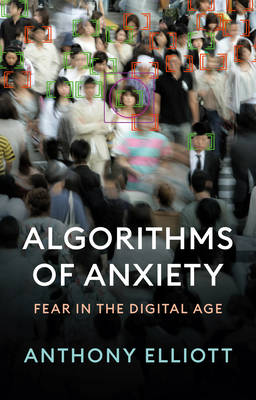
Machine learning algorithms are widely presumed to herald a world in which the crippling burdens of anxiety can be left behind. The digital revolution promises a brave new world where individuals, communities and organizations can at last take control of the future - anticipating, designing and commanding the future, possibly even with mathematical exactitude. Yet, paradoxically, algorithms have unleashed widespread fears and forebodings about the impact of digital technologies. Whether it's worries about unemployment, distress about social media's harmful effects on teenagers, or the fear of intrusive digital surveillance, we live in an age of turbo-charged anxiety where the prophecies of algorithms are increasingly enmeshed with fundamental disruption and anxieties about the future.
In this book, Anthony Elliott examines how machine learning algorithms are not only transforming global institutions but also rewriting our personal lives. He tells this story through a wide-ranging analysis which takes in ChatGPT, Amazon, the Metaverse, Martin Ford, Netflix, Uber, Bernard Stiegler, Squid Game, Kate Crawford, LaMDA, Byung-Chul Han, autonomous drones, Jean Baudrillard and the automation of warfare.
Questioning why people often assume that they need to adopt new technologies in order to lead fulfilling lives, Elliott argues that people may be as much entranced as inspired by their outsourcing of personal decision-making to smart machines.
In this book, Anthony Elliott examines how machine learning algorithms are not only transforming global institutions but also rewriting our personal lives. He tells this story through a wide-ranging analysis which takes in ChatGPT, Amazon, the Metaverse, Martin Ford, Netflix, Uber, Bernard Stiegler, Squid Game, Kate Crawford, LaMDA, Byung-Chul Han, autonomous drones, Jean Baudrillard and the automation of warfare.
Questioning why people often assume that they need to adopt new technologies in order to lead fulfilling lives, Elliott argues that people may be as much entranced as inspired by their outsourcing of personal decision-making to smart machines.
Specificaties
Betrokkenen
- Auteur(s):
- Uitgeverij:
Inhoud
- Aantal bladzijden:
- 241
- Taal:
- Engels
Eigenschappen
- Productcode (EAN):
- 9781509555437
- Verschijningsdatum:
- 23/09/2024
- Uitvoering:
- Paperback
- Formaat:
- Trade paperback (VS)
- Afmetingen:
- 137 mm x 213 mm
- Gewicht:
- 249 g


Alleen bij Standaard Boekhandel
+ 55 punten op je klantenkaart van Standaard Boekhandel
CADEAU

AANGERADEN


Beoordelingen
We publiceren alleen reviews die voldoen aan de voorwaarden voor reviews. Bekijk onze voorwaarden voor reviews.