



Je cadeautjes zeker op tijd in huis hebben voor de feestdagen? Kom langs in onze winkels en vind het perfecte geschenk!
- Afhalen na 1 uur in een winkel met voorraad
- Gratis thuislevering in België vanaf € 30
- Ruim aanbod met 7 miljoen producten
Je cadeautjes zeker op tijd in huis hebben voor de feestdagen? Kom langs in onze winkels en vind het perfecte geschenk!
- Afhalen na 1 uur in een winkel met voorraad
- Gratis thuislevering in België vanaf € 30
- Ruim aanbod met 7 miljoen producten





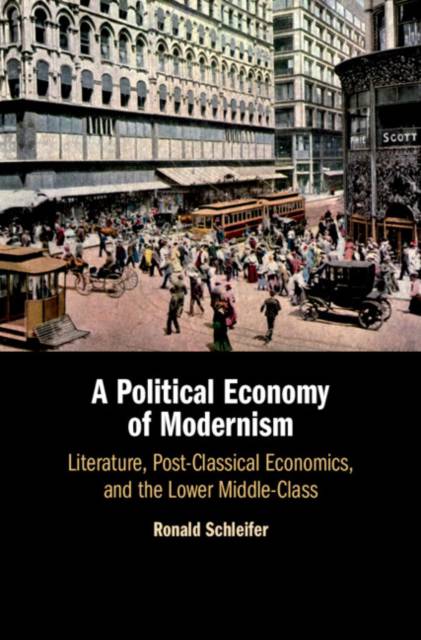
A Political Economy of Modernism
Literature, Post-Classical Economics, and the Lower Middle-Class
Ronald Schleifer
Hardcover | Engels
€ 183,45
+ 366 punten
Omschrijving
In A Political Economy of Modernism, Ronald Schleifer examines the political economy of what he calls 'the culture of modernism' by focusing on literature and the arts; intellectual disciplines of post-classical economics; and institutional structures of corporate capitalism and the lower middle-class. In its wide ranging study focused on modernist writers (Dreiser, Hardy, Joyce, Stevens, Woolf, Wells, Wharton, Yeats), modernist artists (Cézanne, Picasso, Stravinsky, Schoenberg), economists (Jevons, Marshall, Veblen), and philosophers (Benjamin, Jakobson, Russell), this book presents an institutional history of cultural modernism in relation to the intellectual history of Enlightenment ethos and the social history of the second Industrial Revolution. It articulates a new method of analysis of the early twentieth century - configuration and modeling - that reveals close connections among its arts, understandings, and social organizations.
Specificaties
Betrokkenen
- Auteur(s):
- Uitgeverij:
Inhoud
- Aantal bladzijden:
- 350
- Taal:
- Engels
Eigenschappen
- Productcode (EAN):
- 9781108472951
- Verschijningsdatum:
- 18/10/2018
- Uitvoering:
- Hardcover
- Formaat:
- Genaaid
- Afmetingen:
- 236 mm x 163 mm
- Gewicht:
- 635 g



Alleen bij Standaard Boekhandel
+ 366 punten op je klantenkaart van Standaard Boekhandel
CADEAU


Beoordelingen
We publiceren alleen reviews die voldoen aan de voorwaarden voor reviews. Bekijk onze voorwaarden voor reviews.